Our process, tools, and resources
We utilize a wide range of software, both scientific and design oriented, to produce our work. Typically, we use Blender, Python, and Affinity.
Blender is a multipurpose tool which is primarily used for 3D modeling, rendering, and animation. It has a wide gamut of functionality which makes it excellent for visualizing crystals, proteins, devices, and more. In our free time, we code extensions for Blender which are generally geared for scientists interested in rendering crystals. You can find these extensions on our Gumroad.
Python is a computer language which we use for plotting data. We typically use matplotlib. As a note, the Blender API uses Python, which allows for some very interesting integration between Blender and scientific software.
Affinity is a graphics editor which allows us to create compositions using individual elements rendered in Blender and data plotted in Python. As an alternative, we use occasionally use Inkscape.
Affinity is free and Blender and Python are free and open-source. These programs are generally easy to learn but require serious effort and education to realize their full potential. We have a youtube channel where we release tutorials on how to use Blender, Python, and Affinity to make scientific figures, and some personal projects which showcase specific features of Blender, usually in the geometry nodes workspace.
We are passionate about the scientific and creative processes, so we never use AI tools.
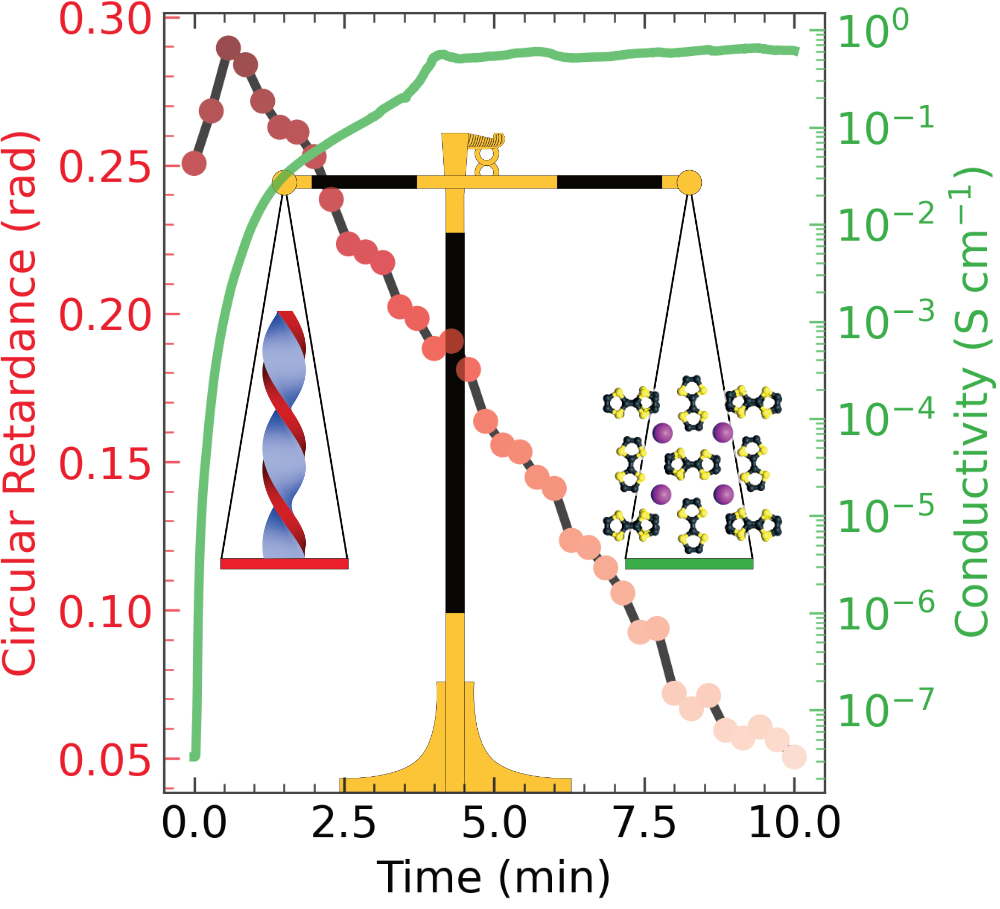
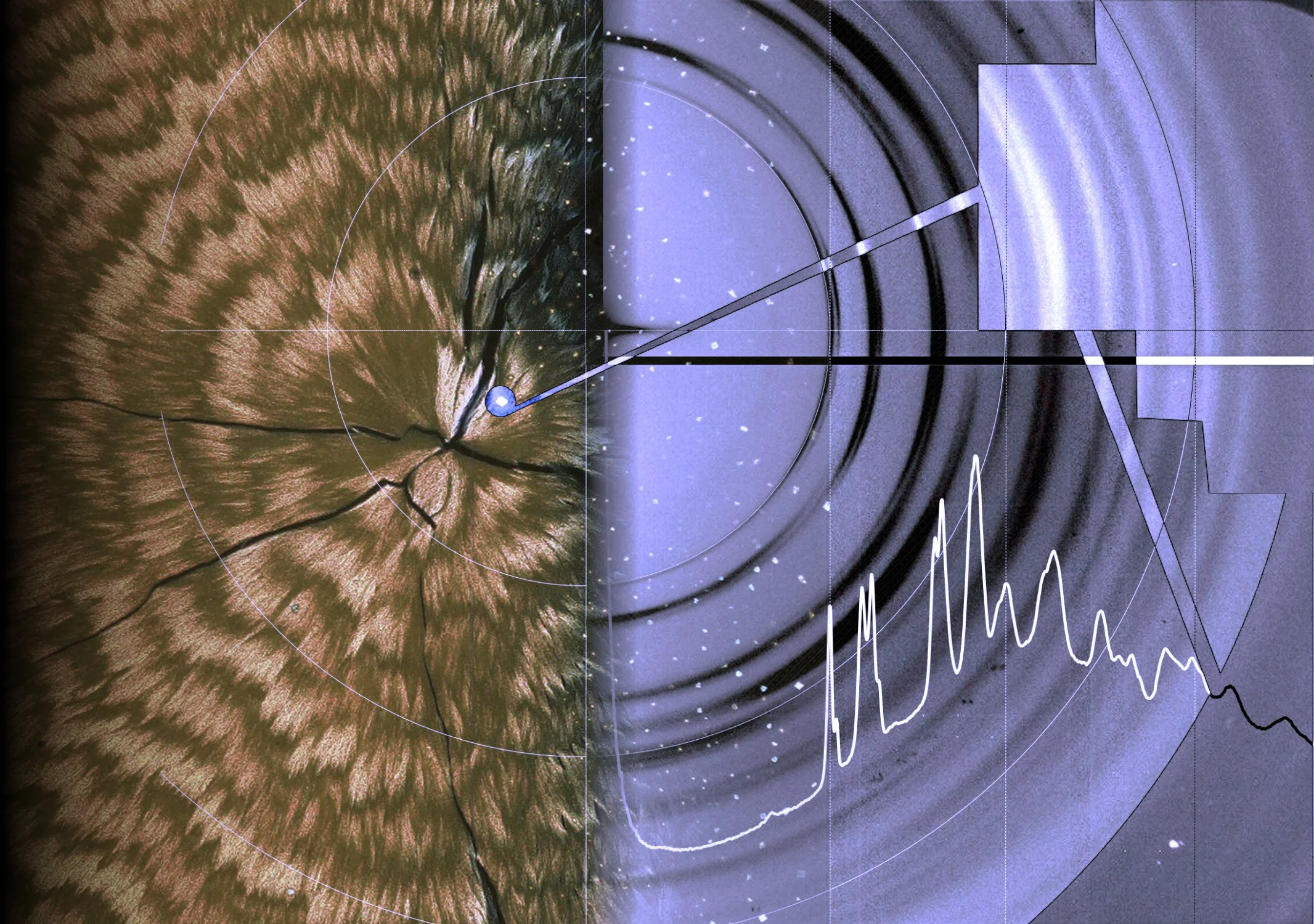
Sometimes data transcends ordinary viewing.
It is common, in research, to screen hundreds of data pieces everyday. On occasion, data will stop you in your tracks and ask you to recognize something sublime about their character. These data can be anything from micrographs to simulation to experimental spectroscopic spectrum to artifacts from image processing. These data form the elements that make up my personal work, which usually takes the form of collage. If you are interested, my commissions are open for personal requests in this vein.